Labour Department tail lift safety device guide: key points at a glance (new vehicles / existing vehicles)
 New Win Tec Company Limited 5 min read

Many truck owners and fleet managers have heard of the “five safety devices” required for tail lifts, but are not always sure exactly what they are, how requirements differ between new and existing vehicles, or how they are checked during inspection. This article summarises the key points of the Labour Department guidance into a quick-read guide, combined with common industry practice in Hong Kong, to help owners master compliance essentials at a glance.
Why must tail lifts be equipped with safety devices?
Operating a tail lift creates risks of foot and body entrapment and falling objects. Under the Labour Department’s guidance on the safe use of tail lifts, employers must provide suitable safety devices on vehicles fitted with tail lifts and ensure they remain effective. Failing to equip devices properly, or leaving devices faulty, not only increases injury risk but can be treated as non-compliant during inspection or enforcement, affecting daily operations.
Common accident scenarios include:
- A foot placed under the platform while it is moving, causing a foot-pinch injury;
- Standing close to the rear as the upper body or head enters the gap between platform and body;
- Staff at the rear failing to notice the platform moving at night or in obstructed visibility;
- Accidentally triggering the control, causing sudden movement or a drop.
The five safety devices address exactly these risks, based on three principles: “prevent accidental activation, signal movement, and block dangerous zones”.
The Labour Department’s five safety devices explained
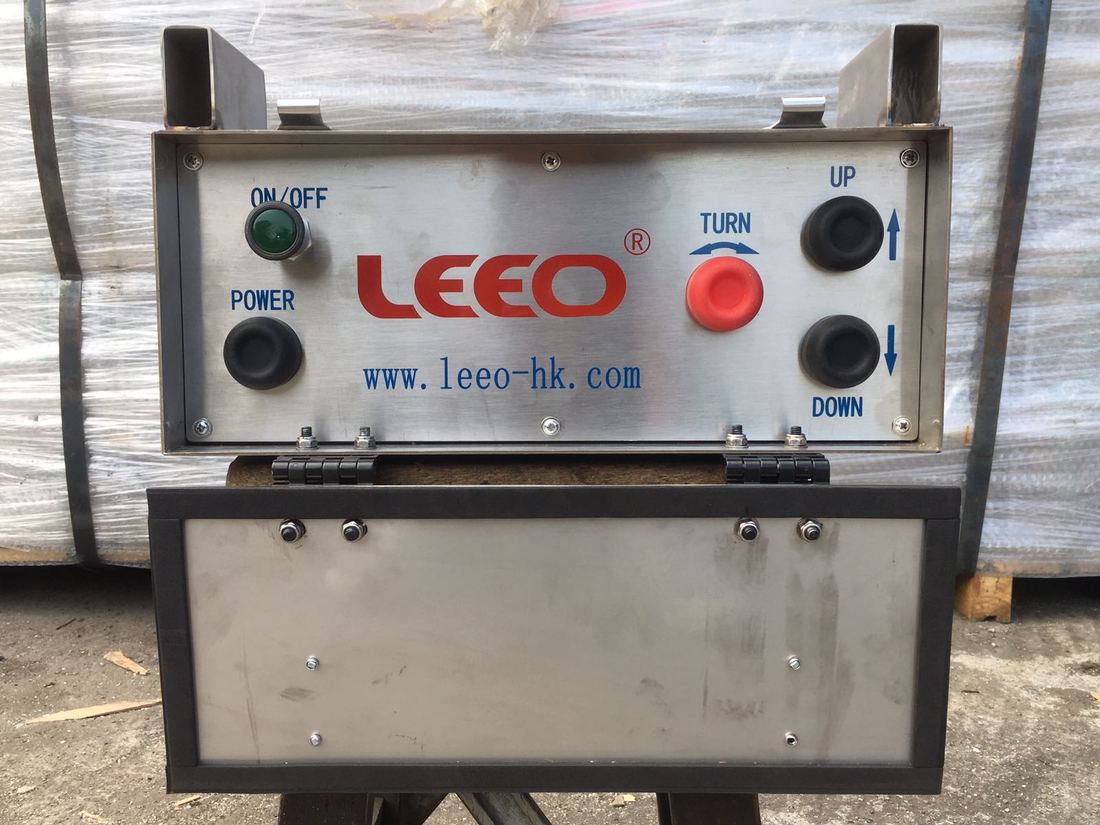
- Original dual-hand control: both hands must press and hold two control buttons for the tail lift to move; releasing either hand stops it immediately — fundamentally preventing single-hand accidental activation. Retrofits on existing vehicles require rewiring the control circuit, best handled by a registered technician.
- Buzzer device: sounds automatically during lifting to alert people near the rear to keep their distance. Especially important at night, busy loading points and obstructed-visibility sites — the most economical warning option.
- Platform flashing light: warning lights fitted to the platform that flash continuously while it moves, improving visibility at poorly lit loading areas.
- Mechanical anti-trap foot guard bar: a mechanical barrier preventing feet entering the danger zone during lifting — pure mechanical protection that doesn’t depend on electronics.
- Laser scanning sensor device: laser scanning of the lifting zone that stops the platform immediately when a body or head is detected — a higher-end protection, especially suited to high-frequency loading fleets.
The five devices complement rather than replace each other. In practice, owners should equip all devices per the guidance and test them regularly to keep every one effective.
New-vehicle fitting vs retrofit on existing vehicles
New-vehicle fitting
Fitted by the distributor or installer before the vehicle leaves the showroom, routing and mounting can follow the original design, making the work more standardised and pricing more transparent. Based on official brochure pricing, the buzzer is about $500, the platform flashing light about $3,000, and the laser scanning sensor from about $26,000; actual quotes depend on vehicle type and configuration.
Retrofit on existing vehicles
A retrofit is added after the vehicle is on the road, so wiring routes must be redesigned for the vehicle type, chassis structure and existing electrical circuits, and pricing varies with difficulty — for example, the original dual-hand control starts at about $2,000. Before retrofitting, have a technician inspect the vehicle first to confirm mounting positions and power take-off points, avoiding interference with the original warranty or other electronic equipment.
Upgraded safety devices: infrared, tactile sensors and AI cameras
Besides the five basic devices, many fleets add upgraded devices for extra protection:
- Infrared sensing devices: detect people in the platform area by infrared, with a sensitive response — suited to frequent loading and unloading;
- Tactile sensors: mounted at the platform edge, stopping instantly when resistance is detected — suited to operations requiring precise platform control;
- AI cameras: use image recognition to monitor the rear area for more comprehensive coverage.
Upgraded devices can coexist with the five basic devices; some are covered by the HKPC “Tail Lift Safety Upgrade Scheme”, so consider them together at installation.
How to keep devices effective long-term?
Safety devices are not fit-and-forget. We recommend:
- Test all devices monthly — buzzer sounds, lights flash, sensors respond;
- Stop using the tail lift immediately if a device fails, and arrange repair — never “keep using it for now”;
- Include a full device status check in the annual Form 5 inspection by a qualified person.
Frequently asked questions
Do all five devices have to be fitted?
The Labour Department guidance requires suitable safety devices based on actual operational risk. In practice, fitting all devices per the guidance makes inspections easier to pass and is the best way to protect employees.
Can the tail lift still be used if a safety device is broken?
No. A failed device means lost protection — stop using the tail lift immediately and arrange a repair, avoiding operation without protection.
What kind of company should do the installation?
Installation should be done by an EMSD-registered vehicle maintenance technician and registered vehicle maintenance workshop. You can also refer to the HKPC “Tail Lift Safety Upgrade Scheme” qualified supplier list to ensure compliant installation and easier inspection.
Summary
Safety devices are not just a compliance issue — they are a basic responsibility to protect drivers, loading workers and passers-by. New Win Tec Company Limited's team brings over 38 years of combined tail lift installation and repair experience, providing new-vehicle fitting, retrofit and upgrade services for the five safety devices at transparent prices, with Form 5 inspection handled in one go after installation. WhatsApp (852) 9098 9100 (24-hour rescue hotline) for enquiries.